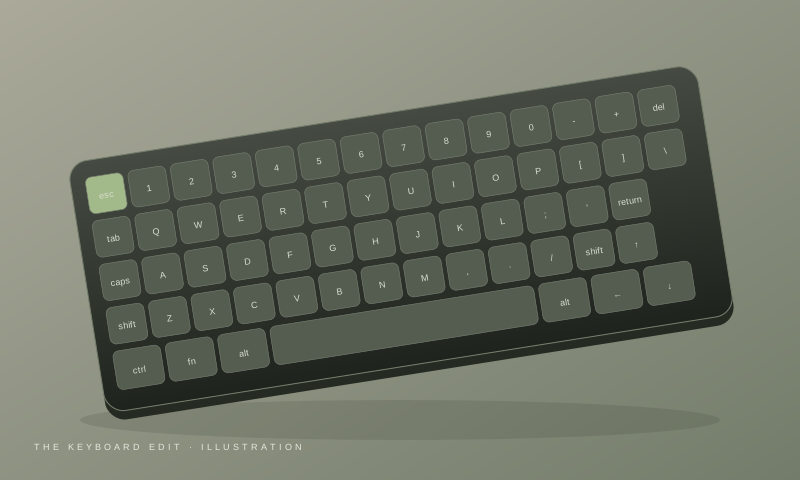
Mechanical keyboards have become extremely popular, but that doesn't mean they're automatically better for everyone.
For office work, writing, design and development, both mechanical and non-mechanical keyboards can be excellent.
The right choice depends on what you value.
What Is a Mechanical Keyboard?
Mechanical keyboards use individual mechanical switches beneath the keys.
Different switches can provide different:
- Feel
- Sound
- Actuation
- Feedback
This gives users more choice.
What Is a Membrane Keyboard?
Membrane keyboards use a membrane-based mechanism beneath the keys.
They're commonly:
- Affordable
- Quiet
- Slim
- Easy to manufacture
Many laptop-style keyboards use a related low-profile/scissor approach.
Mechanical Keyboard Advantages
Better customization
You can choose different switch types.
More pronounced feedback
Some users enjoy the distinct feel.
Repair/modification potential
Some modern keyboards support hot-swappable switches.
Mechanical Keyboard Disadvantages
- Can be loud
- Often heavier
- May take more desk space
- Some models are expensive
Membrane/Low-Profile Advantages
- Quiet
- Slim
- Lightweight
- Familiar laptop-like feel
- Often affordable
Which Is Better for Designers?
Either can work.
If you spend long hours typing, comfort should be the deciding factor.
Which Is Better for Developers?
Developers often spend a lot of time typing, so switch feel can become important.
But again, personal preference matters more than the technology itself.
Which Is Better for Office Work?
If you work around other people:
Quietness matters.
A loud mechanical keyboard can be annoying in an open office.
Final Verdict
Choose mechanical if you value:
Typing feel + customization + switch choice
Choose membrane/low-profile if you value:
Quietness + slim design + simplicity
There is no universal winner.